23 November 2013

Nana's Christmas Cake


I remember, as a child, the ritual of making the Christmas cake. I remember mum carefully measuring out the ingredients, I remember her preparing the tin and tying newspaper around it, I remember licking the bowl when the cake was in the oven, and I remember the heavenly Christmas smell that filled the house for the 4 hours the cake was cooking.
I've taken up the tradition of the Christmas cake, and determined to mimic mum's I rummaged through her tattered much loved recipe book and found this recipe. Handwritten in mum's handwriting, the mum in Mum's Xmas Cake is actually my grandmother. So this recipe has been through 3 generations and when my children are ready to cook their first Christmas cake, that will make four. I hope you enjoy it as much as our family do.


Nana's Christmas Cake

  • 1 kilogram mixed fruit (I used currants, sultanas, and mixed peel)
  • 180 grams butter
  • 1 cup brown sugar
  • 1 tablespoon golden syrup
  • 1 teaspoon mixed spice
  • 1 teaspoon ground nutmeg
  • 2 teaspoons ground cinnamon
  • 2 tablespoons brandy (or 1 teaspoon brandy essence)
  • 1 teaspoon vanilla essence
  • grated rind of 1 lemon (or 1 teaspoon lemon essence)
  • 3 eggs
  • 2 1/2 cups plain flour
  • 1 1/2 teaspoon baking powder
  • 2 tablespoons milk
  • 1 teaspoon baking soda

Method

1.   Soak fruit overnight in 1 cup hot water. Bring to boil and simmer for 10 minutes. 


2.   Remove from heat and add in the butter, sugar, golden syrup, spices, brandy, vanilla essence and lemon. Stir to melt butter then leave to cool. Heat oven to 130 degrees celcius (250 degrees fahrenheit).


3.   Beat eggs and add to the fruit mixture. Dissolve baking soda in milk and add, and finally add sifted flour and baking powder. Mix well and pour into well lined 8 inch cake tin. Wrap newspaper around the tin and tie with string (this insulates the cake to prevent the edges burning while the middle of the cake is cooking).


4.   Place the tin in the oven, on top of a magazine (to insulate the bottom) and cook slowly for 3 hours. Check to see if a skewer comes out clean, if not then cook for another hour. Test again. Turn the oven off and leave the cake in oven to dry out.
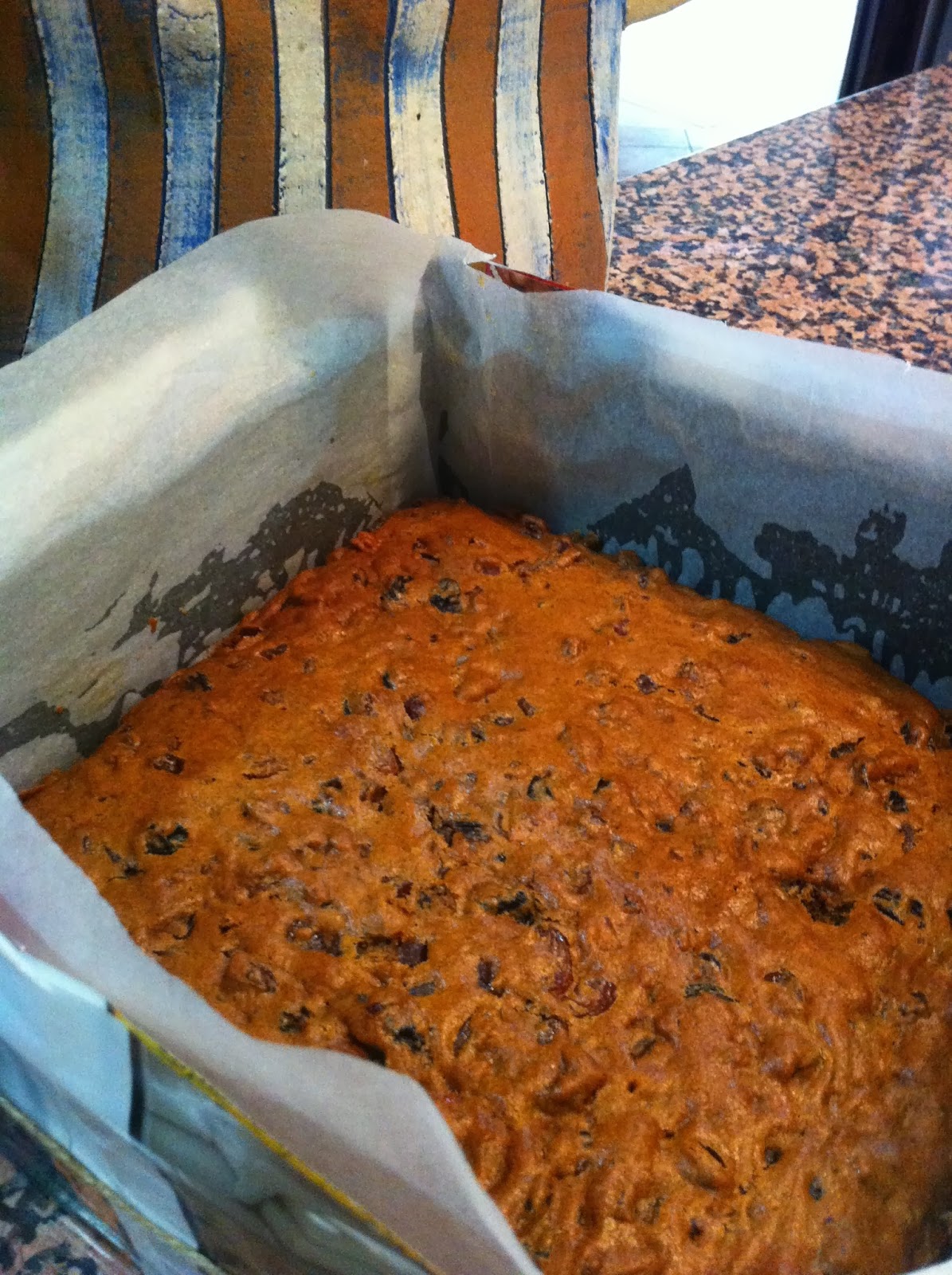


5.   Put the cake into a container with a good seal. Poke holes in the cake with a skewer, and gently pour a few teaspoons brandy into the holes. Repeat every week. Store in a dark cupboard until Christmas. Cake is best made 2 months before Christmas.


8 November 2013

Chana Masala


I've been going through an Indian food phase recently, I love the combination of spices, which you can buy ready blended or in my case, I take such pleasure out of roasting the spices and grinding them together to create a wonderful curry powder. I bought a cheap as chips coffee grinder and it only gets used for spices, if you like using different spices, it's well worth buying as freshly ground is so muh tastier than pre-mixed powder.

Northern Asian food requires more time in the pan than SE Asian food. You need time to cook out the raw flavours in the spices, and time too for the flavours to develop and blend together into something that is greater than the individual spices that go into it. I'm also a big fan of using different kinds of protein, and one of my favourites is chick peas (garbanzo beans to the folks in the US).

Chana Masala

  • 2 tablespoons chana masala powder
  • 800 grams tinned chick peas
  • 2 tablespoons oil (not olive)
  • 1 cup finely chopped onions
  • 1 inch thumb of ginger, grated
  • 2 cloves garlic, minced
  • 1 large tomato, chopped or 1/2 cup canned chopped tomatoes
  • 1/2 teaspoon salt
  • 3 tablespoons freshly grated coconut (optional)
  • 5 small shallots (optional)

Masala Powder
  • 3 tablespoons coriander seeds
  • 1 tablespoon cumin seeds
  • 2 cardamon pods
  • 6 whole cloves
  • 2 dry red chillies
  • 1 teaspoon black peppercorns
  • 1 inch piece cinnamon
  • 1 teaspoon powdered ginger
  • 1/4 teaspoon nutmeg powder

Method

1.   If making the masala powder, roast the whole spices in a dry pan individually as they all take differing amounts of time to cook. Grind together in a spice grinder, and then mix with the dry ginger and nutmeg.


2.   Heat the oil over a medium heat, and saute the onion, ginger and garlic until onion is soft, add in the curry powder and cook a further 5 minutes, stirring constantly.


3.   Add the tomato, chick peas, and 3 cups of water. Bring to the boil, and simmer gently for 25 minutes. Taste and add salt to taste. I added a large chopped potato at this stage as well as I love curried potatoes, so tend to pop them in curries that don't typically have them in there. Stir frequently and if it starts to get dry then add more water. The final curry will be fairly dry.


4.   Blend the coconut and shallots together into a paste and add to the cooked curry, cook for another 2 or 3 minutes and serve with Indian breads like paratha or dosa and rice.


4 June 2013

Caramel Shortbread


I've posted a couple of recipes from my favourite chef, Peter Gordon - this is yet another of his. A delightfully light shortbread mixture topped with caramel and then topped with more of the shortbread mixture crumbled up.

The caramel mixture is quite simply a can of sweetened condensed milk, boiled for 2 hours and cooled - it's quite magical opening the tin and seeing caramel instead of white sticky condensed milk. I have no idea what the science behind it is, and why it works, but I enjoy the outcome and always boil 2 cans as it keeps in the fridge for about a month, and you can use the caramel in other recipes.


The only changes I make to his recipe is to use all of the tin of caramel (he uses two thirds of a tin) and to bake the shortbread base first, cool, spread on the caramel, crumble on the topping and bake again.


Caramel Shortbread

  • 1 tin of condensed milk (397g)
  • 250 grams unsalted butter, at room temperature
  • 150 grams caster sugar
  • 150 grams cornflour
  • 300 grams plain flour

Method
  1. To make the caramel, put the tin of condensed milk into a deep saucepan and cover with water, by at least 2 inches (I put a clean tea towel in the bottom of the pot to stop the incessant tin on tin noise when the water simmers). Bring to the boil, reduce the heat, pop the lid on and simmer for 2 hours, keeping it topped up with water if the level gets close to the level of the top of the can. Set aside to cool completely before opening.
  2. Heat the oven to 170 degrees celsius (350 degrees F). Cream the butter and sugar until light and fluffy. Sift the two flours together and add to the butter mixture and mix lightly to form a dough. Press two thirds of the dough into a greased baking paper lined 20cm by 30cm tin. Bake for 15 minutes until firm, remove from the oven and cool slightly (about 5 minutes).
  3. Spread the tin of caramel over the top of the shortbread base, and crumble the remaining dough over the top of the base. Bake for 10 to 15 minutes until the top is golden brown.


Cool for 5 minutes and then cut into 1 inch squares, or larger slices if you prefer. Let it cool completely in the tin. Once cooled, put the jug on, invite your friends round and enjoy.


2 June 2013

Basil Pesto


It's hot! 45 degrees hot, that's really really hot! And my basil is dying, or was close to it, I revived it several times by drowning it in water 3 times a day, but the ambient heat had it wilting, so it's time to turn it into one of my favourite things - pesto!


I love the fragrant, fresh, earthy aroma and taste of basil pesto - used simply in a bowl of pasta, spread on pizza as an alternative to tomato sauce or dolloped elegantly onto a seafood canape, it enhances the most simple of ingredients.

Use this as a basic recipe, but if you prefer less garlic, or more cheese, simply add to taste. And you can freeze it, just pop it into ice cube containers, freeze, then pop cubes into a plastic freezer bags - it isn't as good as fresh pesto, but it's not far off.

Basil Pesto
  • 3 cups loosely packed basil leaves
  • 3 cloves garlic, chopped finely
  • 1/2 cup olive oil
  • 1/2 cup pine nuts
  • 1/2 cup parmesan cheese

Method
  1. Toast pine nuts over a low heat in a pan for a few minutes until just starting to colour.
  2. Quite simply...pop all of the ingredients into a food processor and blend until well combined, but still a bit chunky.


23 May 2013

Cheese Scones


There are a few recipes that I make so often, that they are scribbled out on post its and stuck to the fridge door - this is one of them. I got it from my mother's cookbook. She was an avid collector of recipes, she'd painstakingly cut them out of newspapers or magazines or jot them down on scraps of paper. Credit where credit's due, I think this recipe came from the monthly New Zealand Machine Knitters Society newsletter - always a treasure trove of tried and tested recipes.

The key to making a good light scone is not to handle the dough too much. When it comes time to add the liquid, do it swiftly and mix very lightly. This is a savoury scone, but you can make a sweet version by omitting the cheese, adding a tablespoon of sugar to the dry mixture, and then add dried ingredients of your choice. I like chopped dates and walnuts, or raisins and cinnamon with a pinch of mixed spice.


Cheese Scones

  • 575 grams flour (about 4 and 3/5 cup)
  • 3 teaspoons baking powder
  • 1 teaspoon salt
  • 100 grams butter, chopped finely or grated
  • 300 grams grated cheese
  • 450 mls milk 

Method

1.   Sift flour, salt and baking powder together.
2.   Rub in butter with finger tips until it resembles bread crumbs and mix in the grated cheese.
3.   Add in the milk and mix very briefly until it starts to come together.
4.   Tip onto the counter, and gently squeeze it together until it comes together into a dough.


5.   Press into a rectangle and cut into 12 equal pieces. Place onto a floured baking tray, and brush with milk.


6.   Bake at 200 degrees celsius for 12 to 15 minutes, until golden brown and cooked through.